

For millions of baseball fans, Shohei Ohtani represents extraordinary discipline, unmatched athletic talent, and the determination required to achieve greatness on the world's biggest sporting stages. Yet imagine a moment when the celebrated Los Angeles Dodgers superstar faces a deeply personal challenge that cannot be resolved through practice, preparation, or competitive excellence. In this dramatic alternate-reality story, Shohei and Mamiko Tanaka confront an unexpected turning point that forces them to reconsider the meaning of partnership, ambition, and personal happiness.
The story begins on a quiet evening in California, far removed from the bright lights of Dodger Stadium and the thunderous applause that usually accompanies Ohtani's appearances. Shohei returns home after another demanding day of professional commitments, expecting the familiar comfort of a peaceful evening with his family. Instead, he finds Mamiko sitting beside a window, holding a small notebook and looking unusually thoughtful.
At first, the atmosphere seems ordinary, with the sounds of evening traffic drifting faintly through the open windows. Shohei notices the notebook but says nothing, choosing instead to sit beside Mamiko and ask about her day. Her response is gentle but serious, suggesting that a conversation they have postponed for months can no longer wait.
The conversation that changes everything
In this imagined scene, Mamiko explains that she has been reflecting on the direction of her life and the personal aspirations she placed aside during major transitions. Her years as a professional basketball player taught her to value independence, discipline, and the satisfaction of pursuing meaningful goals. Although she appreciates the life they have built together, she has begun questioning whether she has given herself enough room to explore her own future.
Shohei listens carefully, initially struggling to understand why the conversation feels so different from their usual discussions. He has always believed that supporting his family means providing stability, security, and opportunities for everyone to thrive. Yet Mamiko gently reminds him that emotional fulfillment cannot always be measured through comfort or material success.
The exchange becomes increasingly emotional as both acknowledge the extraordinary pressures surrounding their lives. Shohei's professional schedule demands constant travel, physical preparation, and intense public attention, while Mamiko must navigate expectations associated with being married to an international sporting icon. Neither person is portrayed as responsible for the growing distance, because the conflict emerges from competing needs rather than betrayal or wrongdoing.
 A decision neither expected to face
As the evening progresses, Mamiko reveals that she has been considering a new professional opportunity that would allow her to reconnect with interests developed during her basketball career. The possibility involves travel, independent projects, and a lifestyle that may not easily align with Shohei's demanding baseball schedule. Her excitement is unmistakable, but so is her concern about how the decision could affect their relationship.
Shohei initially responds with encouragement, recognizing the importance of allowing Mamiko to pursue her own ambitions. However, the practical implications gradually become clear as they discuss the possibility of spending extended periods in different locations. Their conversation moves from hopeful planning to a difficult acknowledgment that even loving partners can encounter circumstances for which there are no simple solutions.
In the dramatized narrative, the couple eventually considers a temporary separation as a way to reflect on their individual needs. The suggestion is not presented as an impulsive reaction or an angry confrontation, but as the result of a thoughtful and painful discussion. Both understand that creating distance might offer clarity, although neither knows what the future will bring.
The emotional cost of living in the spotlight
The imagined turning point highlights a challenge frequently explored in stories about high-profile relationships: the difficulty of preserving individuality while navigating public expectations. When one partner becomes internationally famous, ordinary decisions can acquire extraordinary significance, and even private conversations may feel overshadowed by outside attention. The resulting pressure can complicate relationships that might otherwise develop away from public scrutiny.
For Shohei, the story creates an unfamiliar emotional challenge because his usual methods of overcoming obstacles offer little guidance. In baseball, preparation and persistence can improve performance, even when results remain unpredictable. Personal relationships, however, require communication, compromise, and a willingness to accept that another person's dreams may not always follow the same direction.
Mamiko's perspective adds another dimension to the narrative, emphasizing that supporting a partner does not require abandoning personal identity. Her imagined desire to pursue independent opportunities reflects the broader experience of people who must balance relationships with professional ambitions. Rather than portraying her decision as selfish, the story presents it as a difficult attempt to understand what a fulfilling future might look like.
A quiet farewell that leaves both hearts heavy
Several days later, the fictional couple meets in a peaceful garden overlooking the California coastline, choosing a place where they can speak without interruptions. Shohei arrives first and waits beside a small wooden table, watching the ocean as he considers everything they have discussed. When Mamiko joins him, their greeting is affectionate but restrained, reflecting the uncertainty that has settled between them.
They spend much of the afternoon remembering the moments that brought them together, including conversations about sports, shared cultural experiences, and the comfort of building a life far from their native Japan. The memories produce smiles, but they also make the prospect of change more difficult to accept. Their relationship has been shaped by years of companionship, and neither wants those experiences reduced to a single painful decision.
In the imagined scene, Mamiko thanks Shohei for respecting her need to explore a different direction, even when doing so creates uncertainty. Shohei responds by acknowledging that love should include the freedom to grow, although he admits that understanding a decision does not make it emotionally easy. Their exchange becomes the central moment of the story because it emphasizes respect rather than resentment.
What the real record tells us
Outside this imagined narrative, Shohei Ohtani and Mamiko Tanaka's marriage has been documented through public appearances and family milestones. The couple married in 2024, and Shohei announced the birth of their daughter in April 2025. A relationship timeline updated in June 2026 also reported that they had welcomed a second child, making claims of an officially confirmed breakup particularly important to verify before repeating them as news.
Their decision to keep much of their personal life private means that outsiders should not assume that limited public appearances indicate relationship problems. Professional schedules, parenting responsibilities, and individual preferences can all influence how frequently a couple appears together. A dramatic storyline may explore the emotional complexity of separation, but it cannot establish facts about the private lives of real people.
The distinction is especially meaningful when considering the intense attention surrounding Ohtani's professional achievements. Fans may feel connected to an athlete whose career they have followed for years, yet that connection does not provide access to every personal decision. Respecting the boundaries between public accomplishments and private relationships remains essential.
An ending filled with uncertainty and compassion
As the imagined afternoon comes to an end, Shohei and Mamiko stand together near the garden entrance, neither certain how their story will unfold. They exchange a quiet embrace, acknowledging that their shared memories will remain meaningful regardless of the choices ahead. The moment carries sadness, but it also reflects the dignity of two people trying to navigate a difficult situation with kindness.
Shohei watches as Mamiko walks toward the waiting car, then turns back toward the ocean and considers the challenges that lie ahead. For once, the future cannot be mapped through a training schedule or a carefully planned season, because the answers depend on emotions that may change with time. The uncertainty becomes a reminder that even the most successful individuals cannot control every aspect of life.
The story closes without declaring a winner or assigning blame, allowing the characters' compassion to remain more important than the outcome. Its emotional message is that relationships can require difficult conversations, personal growth, and extraordinary courage, even when affection remains. In this alternate reality, the most surprising development is not a scandal or a betrayal, but the recognition that two people may need different things at different moments in their lives.
And while the fictional chapter ends with an unanswered question, the documented story of Shohei Ohtani and Mamiko Tanaka remains separate from this imagined drama.
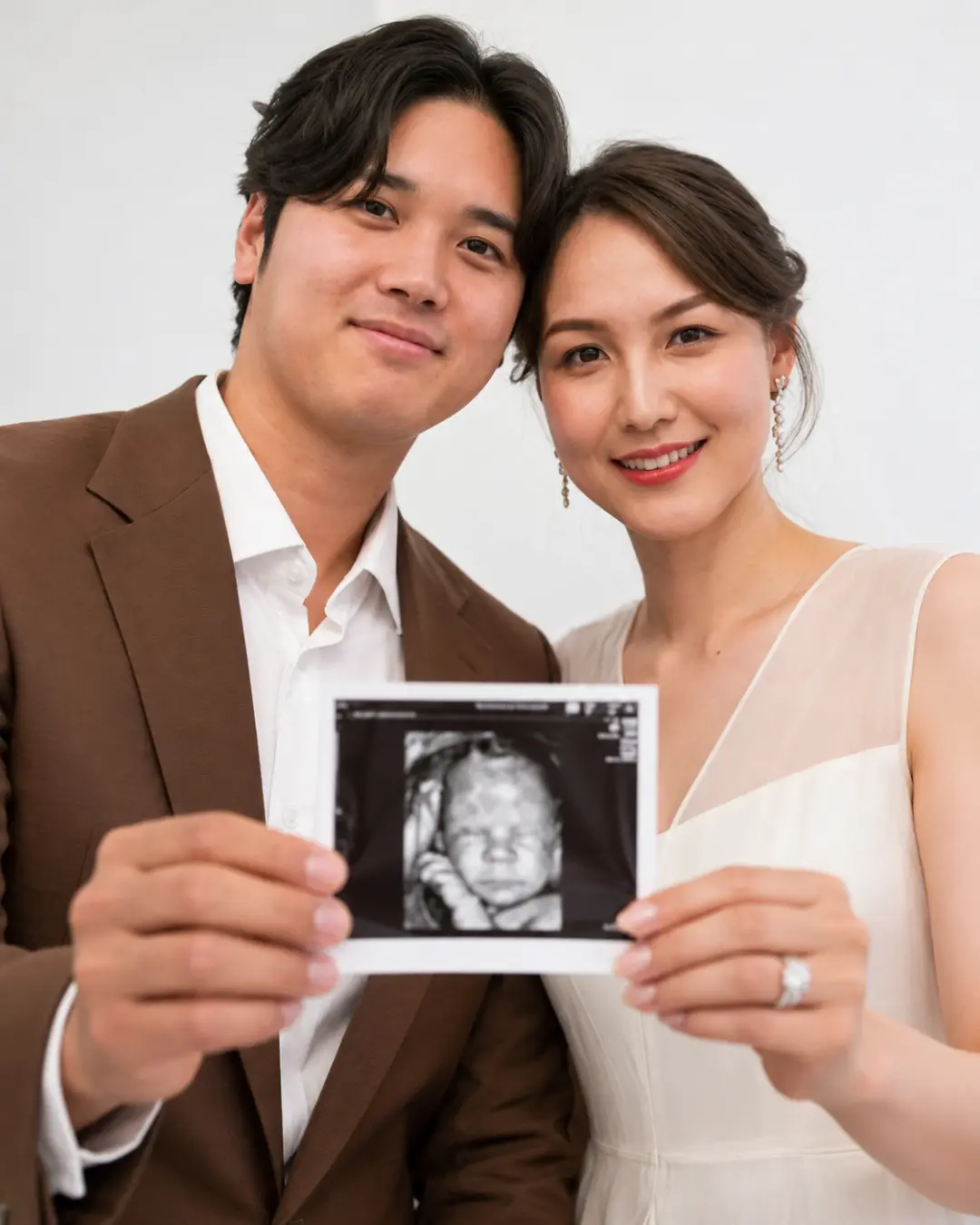
Few athletes have captured the imagination of baseball fans quite like Shohei Ohtani, whose remarkable achievements have made him an international sporting icon. Yet beyond the roaring stadiums, record-breaking performances, and intense competition lies another dimension of his life that has fascinated supporters around the world: his family with Mamiko Tanaka. In this imagined celebration, the couple experiences the excitement of preparing for twins, creating a touching story about parenthood, anticipation, and the extraordinary emotions associated with welcoming new life.
The scene begins on a peaceful California morning, where soft sunlight streams through the windows of a beautifully decorated family home. Mamiko sits beside Shohei at a small breakfast table, surrounded by fresh flowers and a collection of handwritten cards from loved ones. The atmosphere is warm and intimate, reflecting a family moment that feels far removed from the enormous attention surrounding Ohtani's professional career.
In the story, the couple has gathered to celebrate a symbolic new chapter in their family life, with two tiny pairs of shoes placed inside a decorative wooden box. Shohei opens the box slowly, smiling when he notices the matching outfits folded carefully beneath the ribbons. Mamiko watches his reaction with visible affection, and their shared laughter immediately establishes the joyful tone of the occasion.
 Two tiny surprises and one unforgettable celebration
As the imagined celebration unfolds, a small group of relatives and close friends arrives to share the couple's excitement. The living room has been decorated with white balloons, delicate pastel flowers, and two miniature teddy bears sitting beside a beautifully wrapped gift. Every detail emphasizes the idea of togetherness rather than spectacle, allowing the gathering to feel like a private family occasion.
At the center of the room stands a large white cake decorated with two tiny baseballs and a pair of golden stars. Shohei approaches the table with Mamiko, laughing when he notices that someone has placed miniature Dodgers-inspired decorations beside the cake. The playful detail creates an affectionate connection between his sporting identity and the imagined joys of family life.
The couple then discovers two envelopes containing cards that symbolize the personalities and dreams they might imagine for their future children. One card features a small blue star, while the other displays a delicate pink flower, creating a traditional but purely decorative theme for the gathering. Rather than presenting these symbols as medical information, the scene uses them to celebrate the limitless possibilities of childhood.
Shohei reads the first card aloud, smiling at a message about courage, kindness, and the freedom to discover one's own interests. Mamiko opens the second card and finds a note about curiosity, compassion, and the importance of growing up surrounded by encouragement. The messages move the guests because they emphasize the qualities that matter most in raising children, regardless of their future ambitions.
Shohei Ohtani's imagined emotional reaction
Known for his extraordinary focus and composure on the baseball field, Ohtani becomes a very different figure in this intimate family scene. Instead of preparing for a difficult pitcher or an important postseason appearance, he finds himself contemplating the everyday responsibilities of parenthood. The imagined contrast highlights how even the most accomplished athletes encounter experiences that cannot be measured through statistics or championship trophies.
Shohei gently picks up one of the tiny baseball-themed outfits and holds it against his chest, drawing affectionate laughter from the guests. Mamiko smiles as she watches him examine the miniature clothing with the same concentration he might bring to studying a baseball game. Their interaction creates one of the celebration's most charming moments, blending humor with genuine emotional warmth.
The story then shifts toward a quieter conversation between the couple, who sit together near a window overlooking the garden. They imagine future mornings filled with children's laughter, family meals, and the challenges of balancing professional commitments with time at home. Their reflections are simple, but they communicate the enormous emotional significance of preparing for a growing family.
Mamiko's role in a new family chapter
Mamiko Tanaka's background as a former professional basketball player adds another dimension to the imagined story. Having experienced the discipline, sacrifices, and teamwork required in competitive sports, she understands the demands associated with an elite athletic career. Those qualities become important themes as the couple considers how to create a supportive environment for children.
In the dramatized scene, Mamiko speaks about wanting a home where curiosity and kindness matter more than public recognition. She imagines encouraging children to explore different interests without feeling pressured to follow the athletic achievements of their parents. Her perspective introduces a thoughtful reminder that family identity should be shaped by personal happiness rather than expectations.
Shohei responds with a warm smile, suggesting that the most valuable lessons children can learn often come from ordinary experiences. He imagines playing games in the backyard, sharing meals, and celebrating small achievements that never appear on television. The conversation becomes a touching reflection on the difference between public success and private fulfillment.
A celebration inspired by a real family milestone
The emotional foundation of this imagined story comes from the couple's real journey into parenthood. Shohei and Mamiko welcomed their first child, a daughter, in April 2025, an occasion that brought congratulations from baseball fans and fellow athletes. That confirmed milestone provides a meaningful context for a creative story about family growth without establishing any subsequent pregnancy.
The arrival of their daughter also illustrated the importance of protecting family privacy amid extraordinary public attention. Ohtani's professional life is extensively documented, but personal medical matters and decisions about future children belong to the family. An imagined celebration can explore universal emotions without implying that private reproductive treatments or pregnancy details have been publicly disclosed.
For fans, the appeal of the story lies partly in seeing an internationally celebrated athlete portrayed through familiar experiences. Parenthood introduces responsibilities and emotions that transcend professional status, connecting public figures with the everyday lives of their supporters. Whether someone follows baseball closely or simply appreciates a touching family narrative, the themes of love and anticipation remain recognizable.
A beautiful ending filled with hope
As the afternoon draws to a close, the guests gather outside for a final photograph beneath an arch decorated with white and pale blue flowers. Shohei and Mamiko stand together holding the two tiny outfits, smiling as sunlight illuminates the garden. The scene captures the playful excitement of imagining what the future might hold.
Later, when the house becomes quiet, the couple returns to the wooden box containing the miniature shoes and handwritten messages. Mamiko carefully folds the cards while Shohei places the small baseball decorations beside them, preserving the keepsakes from their celebration. Their gestures suggest that meaningful family memories often begin with the simplest objects.
The imagined story ends with the couple sitting together as evening falls, reflecting on the happiness they have already experienced and the possibilities that remain ahead. There are no dramatic speeches, public announcements, or extraordinary promises, only the gentle optimism associated with family life. In this romantic vision, the greatest celebration is not the possibility of twins, but the love and understanding that make every new chapter worth embracing.