DALLAS, TEXAS — The Dallas Cowboys have always been a franchise where expectations are enormous, pressure is relentless, and every decision attracts national attention.
But in a dramatic fictional scenario, head coach Brian Schottenheimer finds himself confronting a controversy that threatens something more important than the team's next victory: the discipline and trust inside his locker room.
According to the imagined storyline, three unnamed Cowboys players become involved in a nightclub controversy after allegedly attending a late-night party despite missing team activities.
The situation escalates when Schottenheimer learns of the supposed incident and calls an emergency team meeting.
What follows is an intense confrontation that leaves the fictional locker room stunned.
His message is unmistakable.
“Not under my watch!”
The Nightclub Allegation That Sparked the Controversy
In this fictional account, the situation begins when reports circulate internally about several players allegedly spending an evening at a Dallas nightclub.
The controversy is not simply about their personal activities.
Instead, the imagined coaching staff becomes concerned because the players had reportedly missed practice while citing health-related reasons.
For Schottenheimer, that contradiction raises questions about professionalism and accountability.
NFL players have demanding schedules, and recovery is an essential part of maintaining physical performance.
Coaches generally recognize that athletes need rest, medical treatment, and personal time.
However, in the fictional scenario, Schottenheimer believes the alleged conduct violates the standards expected of the organization.
The issue quickly becomes a matter of trust.
And the head coach decides that ignoring the situation would send the wrong message to the rest of the team.
Brian Schottenheimer's Explosive Locker-Room Speech
The fictional confrontation reaches its most dramatic moment when Schottenheimer gathers the entire roster.
Players sit quietly as their head coach addresses the alleged incident.
His expression is serious.
His voice grows louder.
And his frustration becomes impossible to ignore.
In an invented speech created for this storyline, Schottenheimer declares:
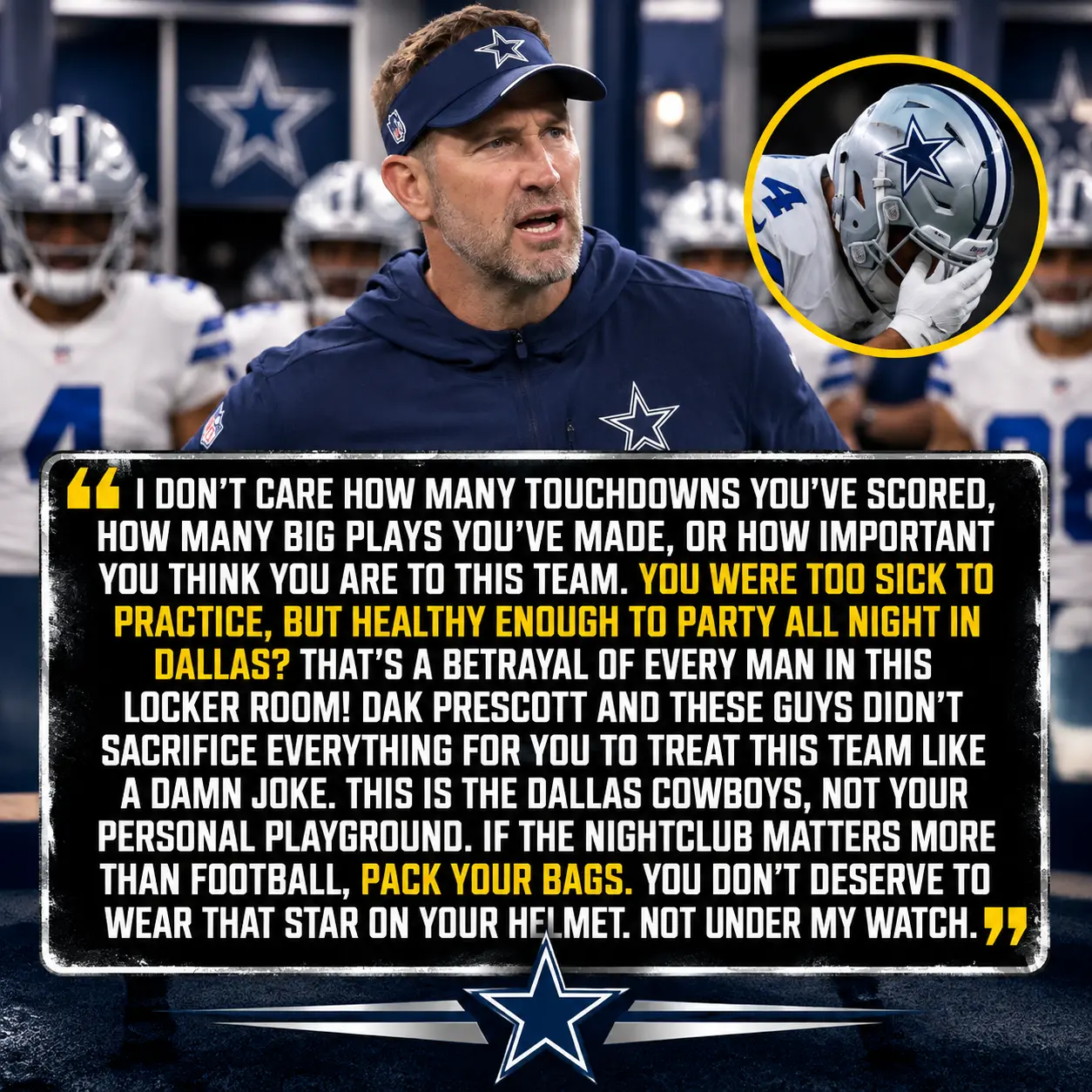
"I don't care how many touchdowns you've scored, how many big plays you've made, or how important you think you are to this team."
He continues:
"If you're too sick to practice but healthy enough to party all night, then we have a serious problem. That's disrespectful to every teammate who shows up and gives everything he has."
The room falls silent.
Then comes the fictional warning that defines the confrontation.
"This is the Dallas Cowboys, not your personal playground. If the nightclub matters more than football, pack your bags. You don't deserve to wear that star on your helmet. Not under my watch!"
The remarks are fictional and should not be attributed to Schottenheimer as an actual statement.
Nevertheless, the imagined speech illustrates the importance of discipline in professional football.

Three Players Face Immediate Consequences
In the dramatized storyline, Schottenheimer announces that three unnamed players will be suspended from team activities pending an internal review.
The decision sends a powerful message throughout the fictional organization.
No player is exempt from accountability.
No individual accomplishment outweighs team standards.
And no amount of talent guarantees protection from disciplinary consequences.
The imagined suspensions also create an immediate challenge for Dallas.
Removing three players from team activities could affect depth, preparation, and game-day execution.
But Schottenheimer believes maintaining trust is more important than protecting short-term convenience.
In the fictional narrative, he tells his coaching staff that championship organizations cannot operate with different rules for different players.
Everyone must meet the same expectations.
Dak Prescott and the Importance of Leadership
Quarterback Dak Prescott occupies an important leadership position within the Cowboys organization.
As one of the franchise's most recognizable players, Prescott's preparation and professionalism help establish expectations for the offense.
In this imagined controversy, his role becomes particularly significant.
The fictional situation challenges veteran players to reinforce the importance of accountability without allowing internal disagreements to divide the roster.
Successful NFL teams depend on mutual trust.
Quarterbacks must trust their receivers to execute assignments.
Offensive linemen must trust one another to maintain protection.
Defensive players must rely on teammates to communicate and fulfill responsibilities.
When that trust is weakened, performance can suffer.
The fictional nightclub controversy therefore becomes about something larger than an evening away from football.
It becomes a test of the team's collective identity.
Why Discipline Matters in the NFL
Professional football demands extraordinary physical and mental preparation.
Players spend countless hours studying opponents, attending meetings, reviewing film, and practicing complicated assignments.
Success requires coordination between dozens of individuals.
Even small mistakes can determine the outcome of a game.
That makes accountability an essential part of organizational culture.
Coaches must establish expectations and communicate consequences when those expectations are violated.
However, effective leadership also requires fairness.
Any genuine disciplinary decision should be based on verified information rather than rumors or assumptions.
Players deserve an opportunity to explain circumstances before conclusions are reached.
The fictional story illustrates the tension between enforcing standards and ensuring that disciplinary decisions are justified.
Cowboys Nation Divided Over the Imagined Decision
The hypothetical controversy creates two competing perspectives among Cowboys supporters.
Some believe strict discipline is necessary to build a championship culture.
They argue that professional athletes have responsibilities extending beyond their individual performances.
From this perspective, a coach must demonstrate that team rules apply equally to everyone.
Others emphasize the importance of understanding the full circumstances before imposing punishment.
They believe coaches should distinguish between verified misconduct and unsubstantiated allegations.
Both viewpoints highlight an important principle.
Accountability is meaningful only when it is accompanied by fairness.
A strong locker room requires both clear expectations and confidence that players will be treated appropriately.
A Crucial NFC East Challenge Awaits Dallas
The fictional controversy unfolds against the backdrop of an important matchup with the Philadelphia Eagles on Monday, October 26, 2026.
The rivalry between Dallas and Philadelphia is among the NFL's most intense.
Every meeting carries implications for divisional pride, momentum, and playoff positioning.
For Schottenheimer, preparation must remain the priority.
The Cowboys need offensive consistency, disciplined defensive execution, and strong communication across the roster.
Facing Philadelphia requires focus.
Unnecessary distractions can make an already difficult challenge even more demanding.
In the imagined storyline, Schottenheimer uses the disciplinary confrontation to reinforce one central message.
The team must come before the individual.
The Bigger Question: Can Tough Leadership Build a Winning Culture?
The fictional suspensions raise a broader question about NFL coaching.
Can strict discipline transform a talented roster into a championship team?
The answer depends on how leadership is applied.
Clear expectations can create stability.
Consistent consequences can strengthen accountability.
But lasting success also requires communication, trust, and respect between coaches and players.
The most effective organizations understand that discipline is not simply about punishment.
It is about establishing standards that everyone believes are necessary for collective success.
In the imagined Dallas controversy, Schottenheimer's challenge is ensuring that his message strengthens the team rather than creating unnecessary division.
Final Thoughts: The Star Must Mean Something
As the fictional story concludes, the Cowboys return their attention to football.
The imagined disciplinary meeting has ended.
The players understand the expectations.
And Schottenheimer makes clear that preparation, professionalism, and accountability will remain central to his coaching philosophy.
Whether Dallas can translate those principles into victories is a separate question.
But the storyline offers a powerful lesson about professional sports.
Talent creates opportunities.
Preparation builds confidence.
Discipline establishes trust.
And teamwork determines whether individual ability becomes collective success.
In the fictional confrontation, Schottenheimer's final message captures the entire debate:
“You can be a superstar on Sunday, but if you can't respect your teammates Monday through Saturday, you've forgotten what wearing that star really means.”
For Cowboys Nation, the imagined message is clear.
No player is bigger than the team. No reputation is bigger than accountability. And no championship is built without discipline. ⭐🏈🔥
This article is a fictional sports drama. No nightclub-related suspension of three Dallas Cowboys players by Brian Schottenheimer has been verified.